


Lung cancer is the leading cause of cancer-related death worldwide. This is largely because lung cancer is often asymptomatic in its early stages, making early detection difficult and resulting in many cases being diagnosed at an advanced stage.
Recent evidence has shown significant benefits from detecting lung cancer through computed tomography (CT), and the use of this screening approach is increasing.
The most common early symptoms of lung cancer include:
If lung cancer spreads to other parts of the body, it may cause:
If you experience any of these symptoms, consult a healthcare professional.
In early-stage disease or in selected cases involving small lung metastases, surgical resection is often the treatment of choice.
The extent of surgery depends on the size and location of the tumor, as well as the patient’s lung function and overall health before the procedure.
In patients with stage II lung cancer who have undergone complete resection, chemotherapy may be recommended as an adjuvant treatment.
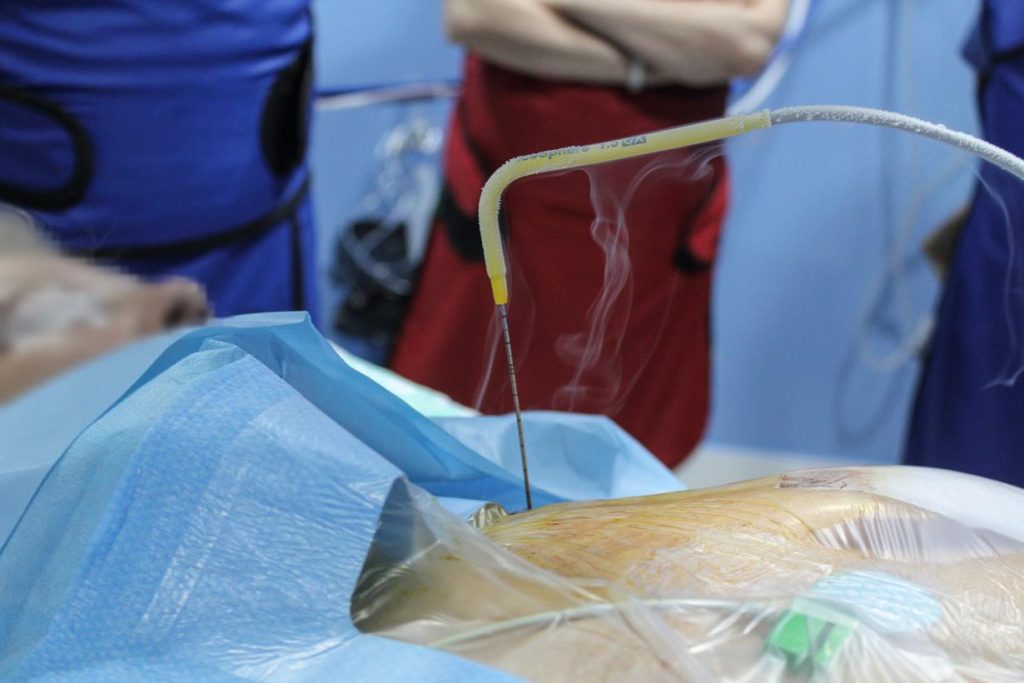
For patients with early-stage (stage I) lung cancer who are not candidates for surgery, percutaneous ablation may be recommended for selected peripheral tumors, including microwave ablation and cryoablation.
Cryoablation of lung tumors has been associated with a local tumor control rate of 94.6% at 12 months of follow-up and is generally well tolerated.
Percutaneous cryoablation for the treatment of lung metastases is considered safe, with promising early local tumor control rates that are competitive with those reported with other contemporary technologies.
(de Baere et al., J Thorac Oncol. 2015)

Microwave Ablation

Cryoablation
Thermal ablation is primarily used to treat small, unresectable tumors in selected patients who are not surgical candidates or whose tumors have not responded to chemotherapy or radiation therapy, for example: